

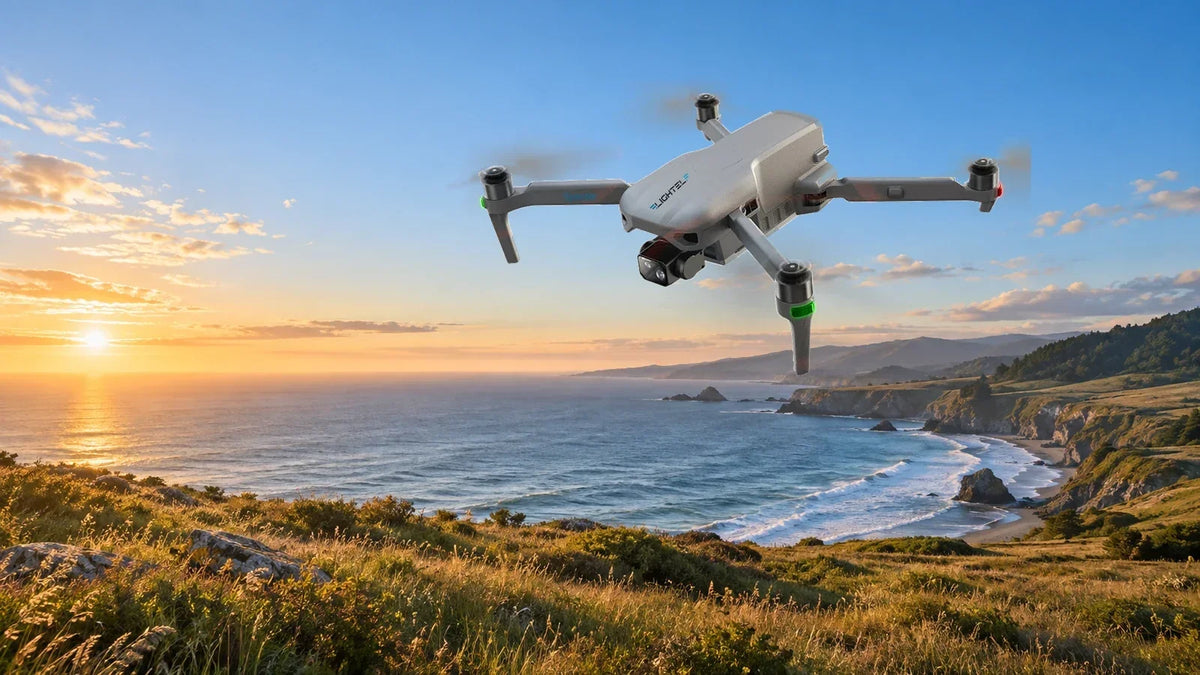
A beautiful view can still become an uncomfortable video if the camera shakes or the horizon keeps tilting. Resolution tells you how many pixels a frame contains. It does not tell you how steady that frame will look.
A three-axis mechanical gimbal physically adjusts the camera as the aircraft moves. It is one reason to look at the whole imaging system rather than a single camera number.
What are the three axes?
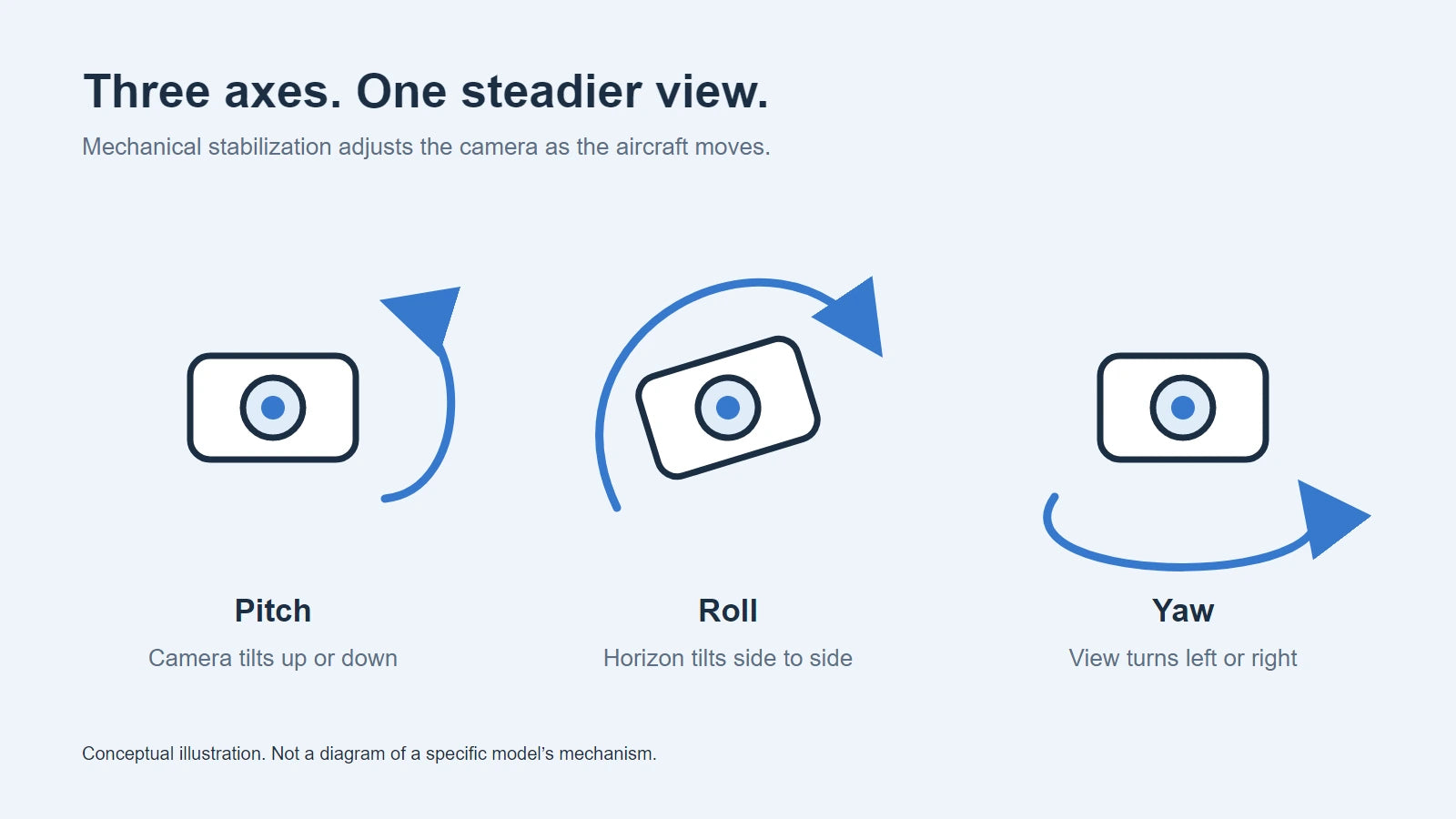
- Pitch: rotation that points the camera upward or downward.
- Roll: rotation that tilts the horizon from side to side.
- Yaw: rotation that turns the view left or right.
The gimbal uses controlled movement to reduce unwanted camera rotation within its operating limits. It helps separate the view you want from some of the aircraft movement needed to fly.
What it improves—and what still needs practice
Mechanical stabilization can help make forward movement, gentle turns and landscape reveals look more composed. It does not eliminate every vibration, make severe wind suitable for filming, or rescue an abrupt change of direction.
It also cannot fix an unsuitable exposure or replace missing image detail. If the aircraft has damaged propellers or a camera fault, address that problem before trying to improve footage with settings.
Try a simpler first sequence
Find an open, permitted location with a clear route. Frame a fixed feature in the landscape, begin recording before the movement, then make one slow, deliberate pass. Hold the ending composition briefly instead of stopping the clip immediately.
Review the result for three things: a comfortable horizon, a consistent speed and a clear subject. Change one thing on the next attempt. This is often more useful than switching between many automatic modes.
Which FlightElf model fits your filming plans?
Falcon, Veyra and Specter all include a three-axis mechanical gimbal. That shared feature lets you choose by the rest of the package.
Falcon is the weekend option, with 25 MP photos, up to 35 minutes per battery and a maximum advertised transmission range of 3 miles. Choose it when the flight itself and casual memories are the main attraction.
Veyra suits travel with less aircraft weight to carry. At 247 g, it offers 35 MP photos, 4K video, up to 38 minutes per battery and a maximum advertised transmission range of 5.5 miles.
Specter is the photography-focused choice, pairing 48 MP photos and 4K video with a 1/1.3-inch sensor. Its advertised maxima are 53 minutes per battery and 9 miles of transmission range.
Choose the aircraft you will bring, then give its camera a clear, intentional movement to record. Stabilization helps most when it supports a well-planned shot.
Gimbal performance has operating limits. Flight time and transmission range vary with conditions; advertised maxima are not guarantees or permission to fly beyond visual line of sight.
Share:
How High Can You Fly? A U.S. Beginner’s Guide to Drone Flight Planning